
How to Turn Pasted Text or Lecture Notes into a Quiz
Copy your notes, clean the structure, and generate practice questions without building flashcards by hand.
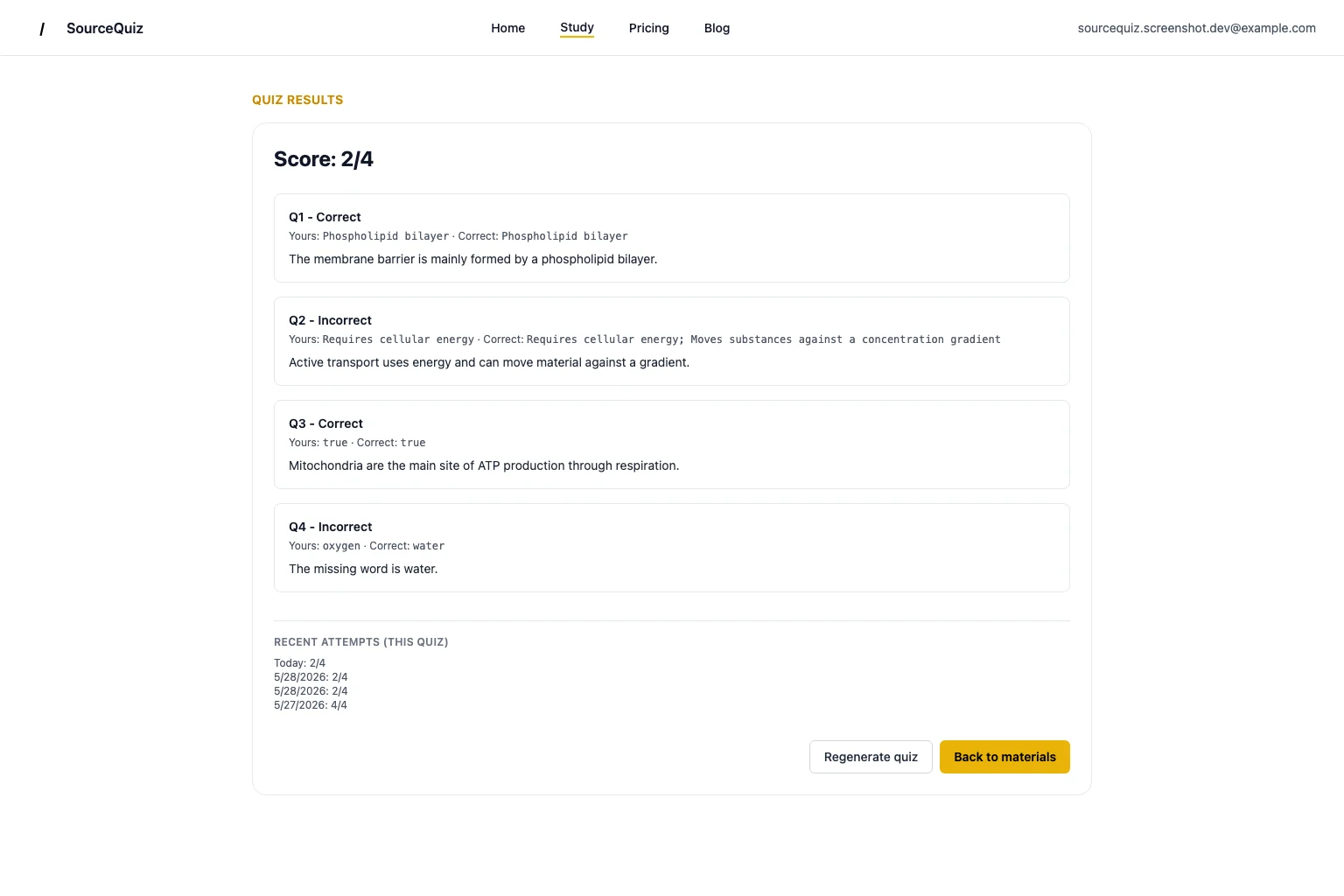

Pasting text is the fastest way to start using SourceQuiz. If you have lecture notes, a copied textbook section, or your own summary doc, you can turn it into practice questions without exporting a file first.
This works especially well when your notes are already organized by topic.
What to paste
Good pasted material includes:
- Lecture notes from one class session
- A chapter summary you wrote yourself
- Definitions and examples from a study guide
- A copied section from an allowed source
- Instructor-provided review notes
Keep one paste focused. If your notes jump from cell division to ecology to genetics, split them into separate materials.
Example notes you can paste
Here is the kind of plain text that works well:
Cell respiration review
Glycolysis happens in the cytoplasm and breaks glucose into pyruvate.The Krebs cycle happens in the mitochondrial matrix and produces carbon dioxide, NADH, and FADH2.The electron transport chain uses electrons from NADH and FADH2 to create a proton gradient.ATP synthase uses that gradient to make ATP.Fermentation regenerates NAD+ when oxygen is not available.
This is not polished writing, but it has enough structure for a useful quiz. It names processes, locations, inputs, outputs, and cause-effect relationships.
From notes like this, a strong first quiz might ask:
| Question focus | Example |
|---|---|
| Location | Where does glycolysis occur? |
| Sequence | Which process comes after glycolysis in aerobic respiration? |
| Cause and effect | Why does fermentation help glycolysis continue without oxygen? |
| Misconception check | Does ATP synthase directly break glucose into pyruvate? |
Those questions are more valuable than generic flashcards because they test whether you can connect the parts of the process.
Clean the notes before generating
You do not need perfect formatting, but structure helps:
- Add clear headings.
- Remove repeated boilerplate.
- Keep examples near the concept they explain.
- Expand abbreviations once.
- Delete sections that are not on the exam.
Headings are especially useful because they give the quiz a map of the material.
Choose question types that match your exam
For pasted notes, start with a mixed quiz:
| Goal | Question type |
|---|---|
| Check definitions | Multiple choice or fill-in-the-blank |
| Catch misconceptions | True/false |
| Practice exam-style distractors | Multiple choice |
| Study “select all that apply” exams | Multi-select |
If you are not sure, generate 10-15 mixed questions first. Then adjust based on what felt too easy or too vague.
Use the first result as a diagnostic
The first generated quiz tells you two things:
- Whether your notes were specific enough.
- Which concepts you cannot recall without looking.
If the quiz asks vague questions, your source probably needs better headings or a narrower topic. If the quiz is clear but you miss several items, the source is good and your study target is obvious.
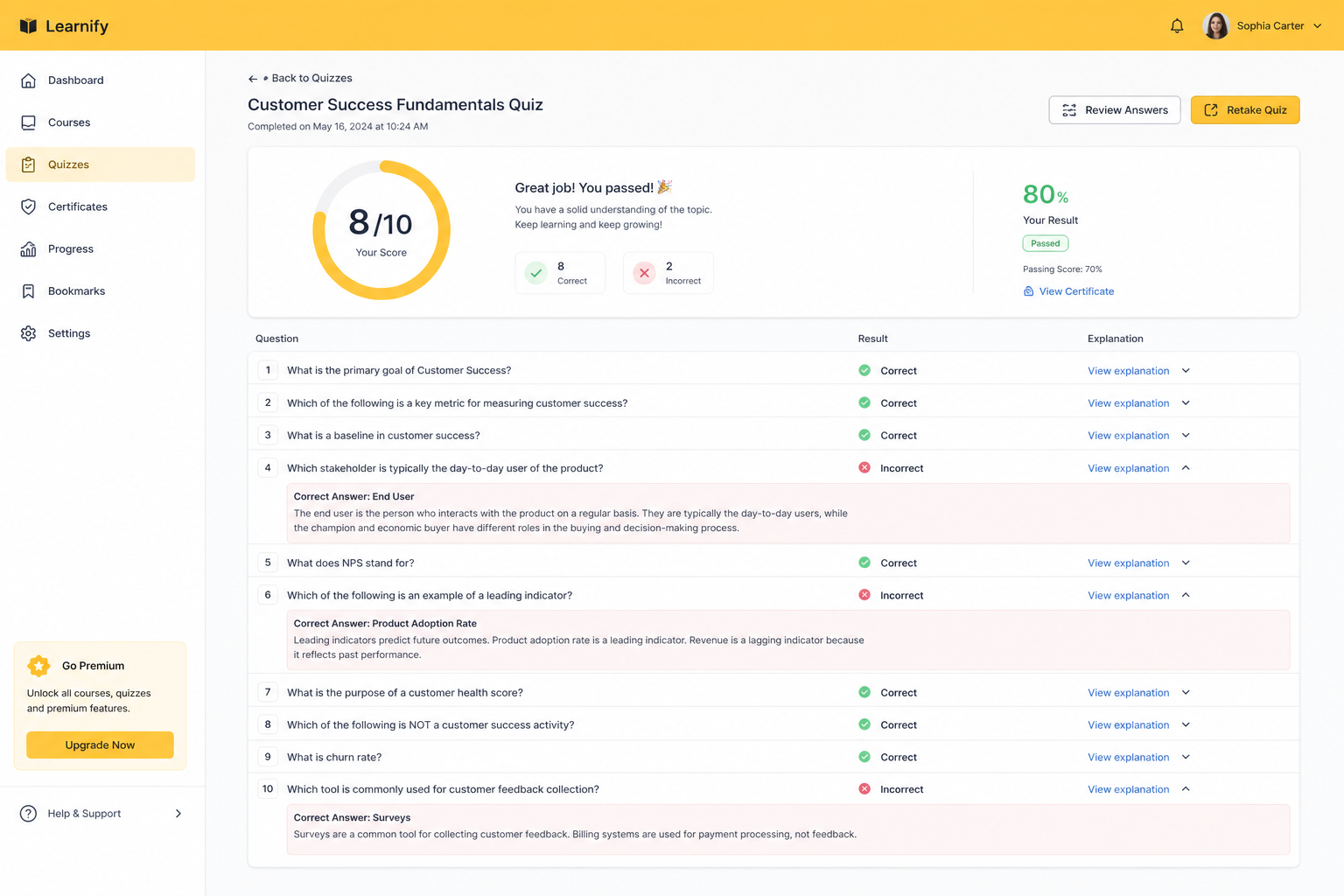
After you finish, sort the misses into three groups:
- Terms you forgot.
- Steps you mixed up.
- Relationships you did not understand.
That turns the quiz result into a repair list instead of just a score.
Take the first quiz cold
Do not keep your notes open during the first attempt. The goal is not a perfect score. The goal is to find gaps while there is still time to fix them.
After you submit, read the explanations for every miss. Those explanations become your next study list.
When to regenerate the quiz
Regenerate when the first set is technically correct but not useful enough.
Good reasons to regenerate:
- The questions are too easy.
- Too many questions test definitions only.
- You need more application-style questions.
- You want another attempt after reviewing your misses.
- Your exam uses multi-select or true/false questions and the first set did not.
Bad reasons to regenerate:
- You missed questions and want a cleaner score.
- The notes are too broad.
- The source is missing important context.
If the source is the problem, edit the pasted notes first. If the quiz style is the problem, regenerate with a different difficulty or question mix.
When pasted notes work better than uploads
Pasting is best when:
- You want speed.
- The source is short.
- You already cleaned the text.
- The original file has messy formatting.
- You copied only the assigned section.
If the source is a long PDF, uploading the file may be easier. Use How to Study from a PDF: Upload, Quiz, and Review Your Mistakes for that workflow.
Try one lecture
Open SourceQuiz, paste one lecture’s notes, generate a short quiz, and answer without looking back. If the first set is off, use How to Regenerate AI Quiz Questions to tighten the second pass.